
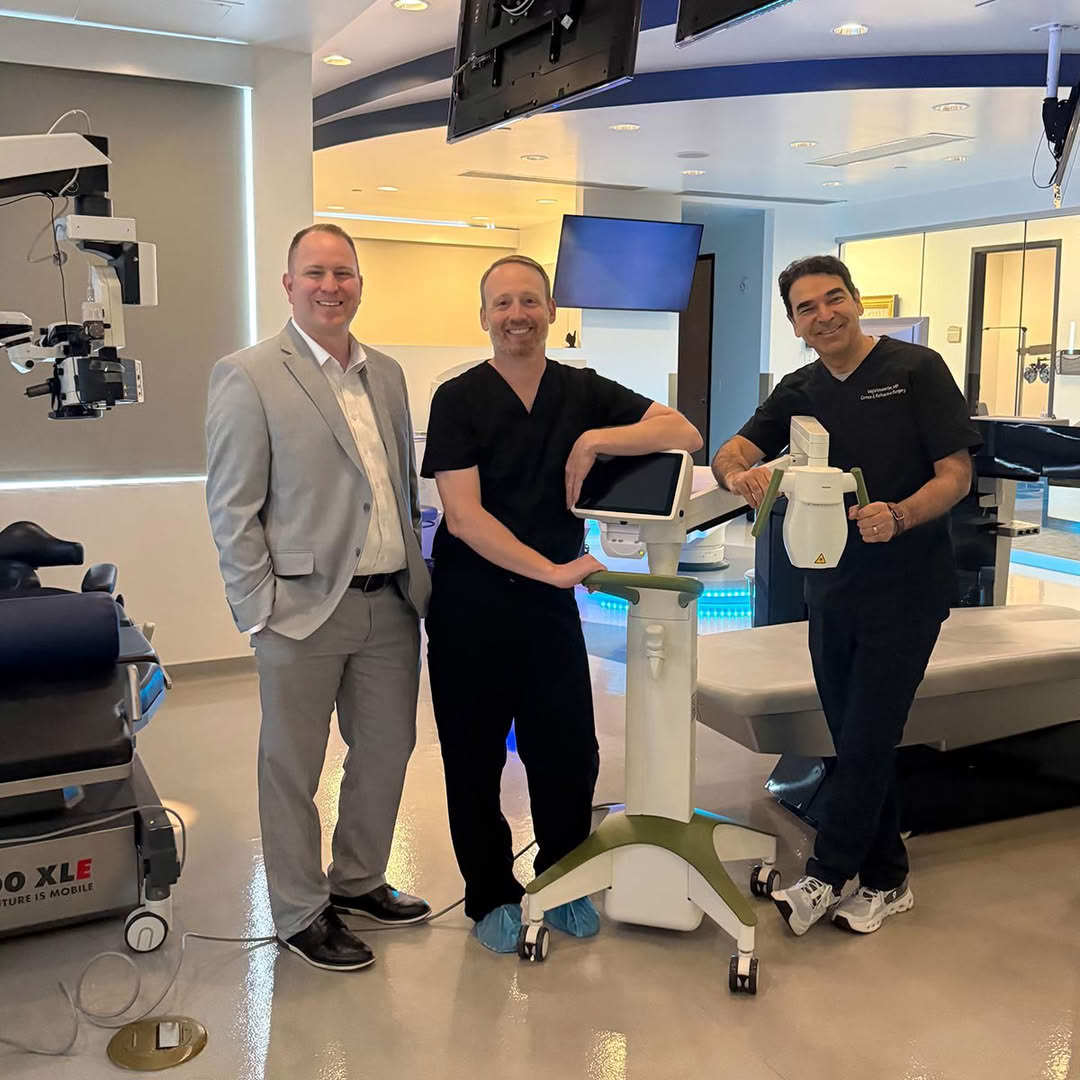
Hoopes Vision is proud to be part of an important advancement in keratoconus care.
Dr. Majid Moshirfar participated in early FDA clinical trials evaluating a new epithelium-on corneal cross-linking approach, also known as Epi-On CXL, for patients with keratoconus. This treatment has now received FDA approval, marking a meaningful step forward in the management of this progressive corneal condition.
“This new Epi-On procedure is designed to improve patient comfort and may allow for a faster recovery,” says Dr. Moshirfar.
Through ongoing involvement in clinical research, Hoopes Vision continues to support the development of new technologies and treatment options for patients in Utah and beyond.
What Is Keratoconus?
Keratoconus is a progressive eye condition that affects the structure of the cornea, the clear front surface of the eye.
In a healthy eye, the cornea maintains a smooth, rounded shape. With keratoconus, the cornea gradually thins and begins to bulge outward into a cone-like shape. As this happens, vision can become increasingly distorted.
Common symptoms of keratoconus may include:
- Blurry or distorted vision
- Increased sensitivity to light
- Frequent changes in glasses or contact lens prescriptions
- Difficulty seeing clearly at night
Without treatment, keratoconus can continue to worsen over time and may lead to significant vision problems.
What Is Corneal Cross-Linking?
Corneal cross-linking, or CXL, is a treatment designed to strengthen the cornea and help slow or stop the progression of keratoconus.
The procedure uses riboflavin (vitamin B2) eye drops, ultraviolet (UV) light, and oxygen to create new bonds within the corneal tissue. These additional bonds help stabilize the cornea and support its shape over time.
It is important to note that corneal cross-linking is not intended to reverse keratoconus. Its primary goal is to help keep the condition from getting worse.
What Makes Epi-On CXL Different?
Traditional corneal cross-linking typically involves removing the cornea’s outer layer, called the epithelium, before treatment. The newly FDA-approved Epi-On CXL approach keeps this outer layer in place.
Because the epithelium remains intact, this technique may offer several potential benefits, including:
- Improved comfort during and after treatment
- Faster recovery
- Less disruption to the surface of the eye
This approach is considered non-invasive because the eye’s surface layer is not removed.
Hoopes Vision’s Role in Clinical Research
Hoopes Vision was selected by Glaukos as one of the clinical research sites for this emerging technology.
Our team contributed to a large-scale study involving nearly 600 eyes from patients with keratoconus. Several Hoopes Vision patients participated in this research, helping expand clinical understanding of how Epi-On CXL performs in real-world settings.
This experience keeps our surgeons and care teams closely connected to evolving treatment options and advancing standards of care.
What This Means for Patients
The FDA approval of Epi-On CXL broadens the treatment options available for patients with keratoconus.
For eligible patients, this procedure may offer:
- A more comfortable treatment experience
- A potentially shorter recovery period
- An opportunity to address disease progression earlier
Because keratoconus is progressive, early diagnosis and timely treatment are important for protecting long-term vision.
Our Commitment to Innovation and Patient Care
At Hoopes Vision, we are committed to staying at the forefront of modern vision care.
Through our research center, patients may have access to advanced technologies and treatment options as they become available. Our goal is to combine clinical expertise, innovation, and personalized care to help each patient receive the treatment that best fits their needs.
Schedule a Consultation
If you or someone you know has been diagnosed with keratoconus, our team is here to help.
A comprehensive evaluation can determine whether corneal cross-linking or another treatment option may be appropriate for your specific condition.
Schedule a consultation with Hoopes Vision to learn more about your treatment options.
Frequently Asked Questions About Epi-On Corneal Cross-Linking
What is Epi-On corneal cross-linking?
Epi-On corneal cross-linking is a non-invasive procedure that strengthens the cornea without removing its outer layer. It is designed to help slow the progression of keratoconus.
Is Epi-On CXL FDA-approved?
Yes. Epi-On corneal cross-linking has received FDA approval for the treatment of keratoconus.
Does corneal cross-linking improve vision?
The primary goal of corneal cross-linking is to stabilize the cornea and help prevent further vision loss. Some patients may notice visual improvement, but results can vary.
Who is a candidate for corneal cross-linking?
Candidates are typically patients with progressive keratoconus. A comprehensive eye evaluation is needed to determine whether treatment is appropriate.
Is the procedure painful?
The Epi-On approach is designed to improve comfort compared to traditional methods. Some temporary discomfort may still occur during recovery.
How long does recovery take?
Recovery varies from patient to patient, but Epi-On CXL is designed to support a faster recovery than procedures that involve removing the epithelium.