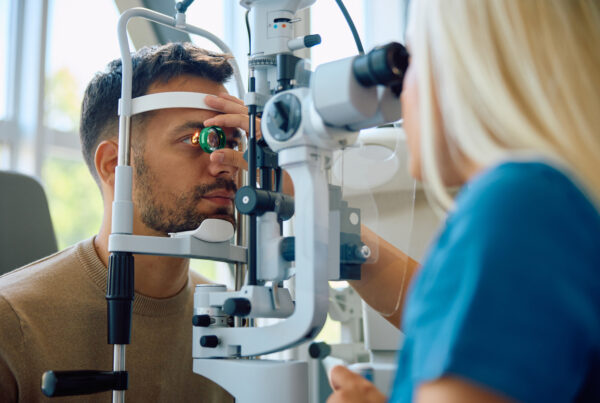


Glaucoma can be sneaky. Many people feel nothing early on even while the optic nerve is being damaged. That is why regular, comprehensive eye exams matter so much. There is no cure, but catching glaucoma early can protect your sight and preserve the activities you rely on every day. With the right care plan, most people can slow progression and keep doing the things they love.
Why glaucoma is hard to notice
For the most common type, primary open-angle glaucoma, there are usually no early warning signs. Vision can seem completely normal until changes show up on testing or you begin to notice subtle gaps in side vision. Because the brain is excellent at filling in missing information, many people do not realize anything is wrong until the disease is more advanced. This is why scheduled eye exams, even when you feel fine, are so important for long-term eye health.
What symptoms can look and feel like by type
Open-angle glaucoma
Open-angle glaucoma usually starts quietly and progresses slowly. Day to day, vision feels normal, which makes it easy to miss early changes. Over time, people may notice gradual narrowing of side vision and small missing spots that make it easier to bump into objects at the edges or require more head turning to see around them. Night driving can also feel harder because glare and reduced contrast are more noticeable in low light, and in advanced stages, central vision can be affected as well.
Angle-closure glaucoma
When the eye’s drainage angle suddenly blocks, pressure can rise quickly and cause dramatic symptoms. People can experience severe eye pain or headache, nausea, a red tender eye, blurred vision, and halos around lights, and these symptoms can come on suddenly. This situation is an emergency that needs same-day care to prevent permanent vision loss. If you suspect an attack, do not wait to see if it improves on its own, because damage can occur quickly and may be irreversible.
Normal-tension glaucoma
Eye pressure may be within the typical range, yet the optic nerve is still vulnerable to damage. Symptoms, when noticeable, mirror open-angle glaucoma and involve slow, patchy loss of peripheral vision over time. Because the pressure is not obviously elevated, regular monitoring and optic nerve imaging are especially helpful for catching change early and guiding treatment decisions.
Childhood glaucoma
In infants and young children, signs can look different from adult disease and tend to be more visible to caregivers. Cloudy or enlarged eyes, light sensitivity, and excessive tearing can be clues that pressure is too high. These changes should be evaluated promptly by a pediatric eye specialist, since early treatment can protect vision during crucial stages of visual development.
What glaucoma is not
Open-angle glaucoma does not usually cause pain early on, so the absence of discomfort is not a reliable sign that everything is fine. Pain, redness, halos, and nausea are more consistent with angle-closure and should be treated urgently to protect the optic nerve. Vision that has already been lost to glaucoma generally cannot be restored, which is why prevention and early detection matter. Modern treatments are effective at lowering pressure and slowing damage, helping you preserve the sight you have.
When to call and when to go now
Call your eye doctor soon if you notice new gaps in side vision, frequent near misses with doorframes or curbs, or worsening night driving comfort, since these functional changes can reflect early field loss. Seek urgent care or an emergency department now for sudden severe eye pain, headache, nausea or vomiting, a red eye, halos, or abrupt vision loss, because these symptoms may signal acute angle-closure and require immediate treatment. If you are unsure how severe your symptoms are, it is always safer to be seen promptly and let a clinician check the pressure and the optic nerve.
Who is at higher risk
Anyone can develop glaucoma, and the risk generally increases with age. A family history of glaucoma raises the likelihood of developing the condition, and factors such as higher eye pressure, thin corneas, very high levels of nearsightedness or farsightedness, previous eye injury, long-term steroid use, and certain general health conditions can add to the risk. Understanding where you stand helps your doctor recommend the right testing schedule and create a plan that fits your needs and lifestyle.
How glaucoma is detected
A comprehensive medical eye exam may include a dilated optic nerve evaluation, measurement of eye pressure, an inspection of the drainage angle, optical coherence tomography to assess nerve fiber layers, and visual field testing to map any blind spots. These tools work together to identify damage early and to track whether treatment is keeping the disease stable. Your doctor interprets these results over time, compares new tests to prior baselines, and uses that information to personalize your care.
How often should you be seen
If you have never had a comprehensive exam, aim for a baseline around age 40 so changes can be measured accurately later. From age 65 and older, most people benefit from exams every one to two years, though your doctor may advise more frequent visits based on your personal risk and test results. Keeping to a consistent schedule makes it possible to catch small changes early and adjust treatment before vision is noticeably affected.
The bottom line
Glaucoma often does not hurt and does not blur vision early, yet it can silently narrow your field of view over time. Knowing the emergency symptoms of angle-closure, understanding your personal risk, and keeping up with regular dilated eye exams are the best ways to protect your sight. If you are concerned about symptoms or would like a second opinion, a comprehensive exam can provide clarity and a plan, and our team can help you navigate next steps with confidence.